The complete guide
How to wake up without an alarm jolt: setting up a sunrise clock properly
Waking to a loud alarm in a dark room is a small shock you pay every morning. Your body is pulled from deep sleep with no warning, and the groggy, heavy feeling that follows can shade the first hour of the day. A sunrise clock removes the shock by doing what the sky does: getting brighter slowly. This guide covers how the light works and how to set it up so it actually improves your mornings.
Why light wakes you better than sound
Your body clock takes its cues from light. Brightness in the morning winds down melatonin, the hormone that keeps you asleep, and starts the processes that make you feel alert. A sound alarm skips all of that and simply interrupts, which is why the same person can feel wrecked by a 6:30 buzzer and fine at 7:00 on a bright summer morning.
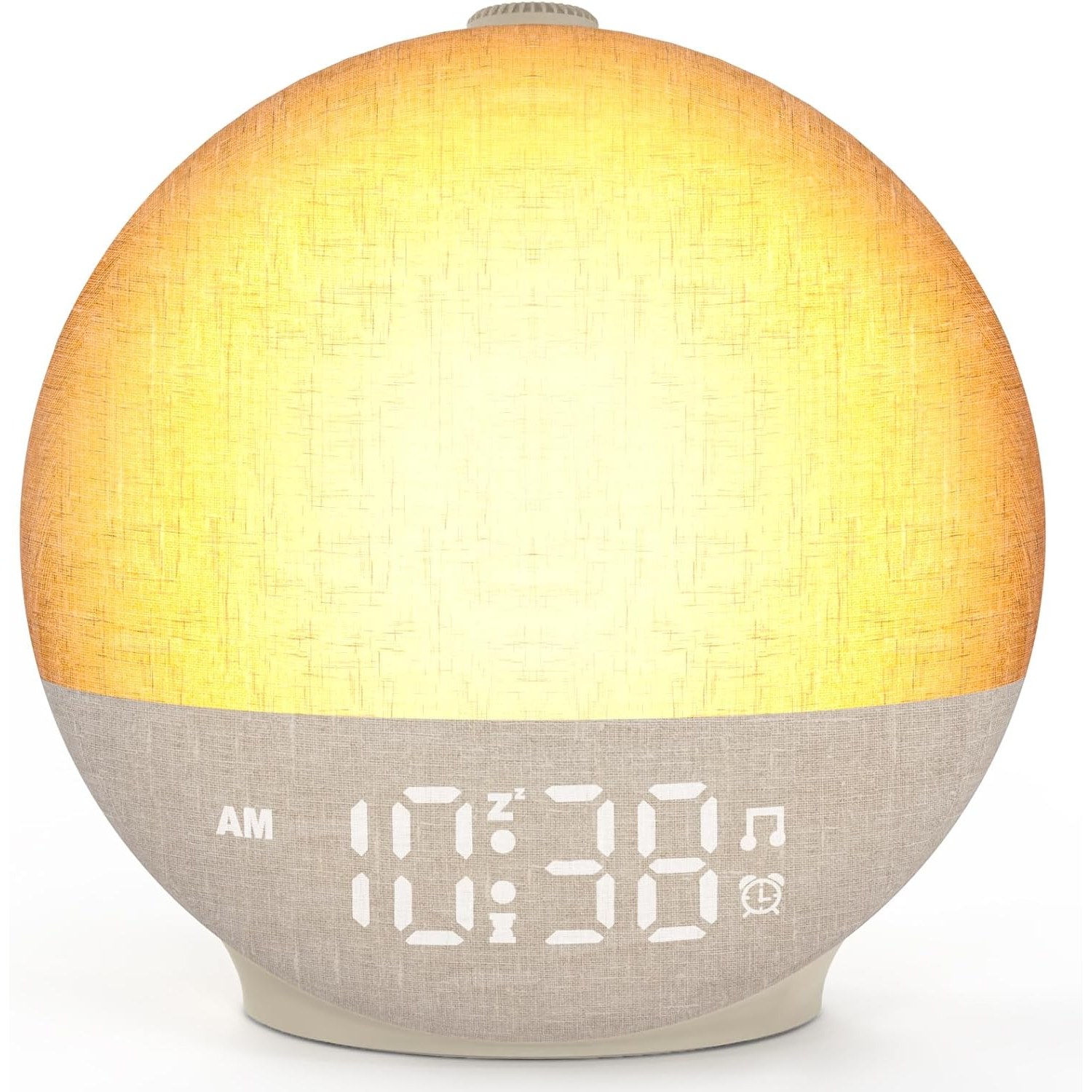
A wake up light recreates the summer morning on demand. The lamp starts dim and warms up over the minutes before your alarm, and because eyelids pass light, the brightening reaches you while you are still asleep. You climb through the lighter sleep stages in order, so when the sound finally plays, it is a tap on the shoulder rather than a bucket of water.
Getting the sunrise right
Put the clock on a nightstand roughly level with your head and within arm's reach, facing you rather than the ceiling. Distance matters: across the room, the light works less and the snooze button becomes a hike, which sounds useful but mostly means the alarm blares longer.
Start with the default sunrise length and a medium peak brightness, then adjust after a few mornings. If you are waking before the sound, you can shorten the climb or lower the peak. If the sound still arrives as a surprise, lengthen the climb or raise the brightness so more of the waking happens before it. Heavy sleepers should run the light at full brightness and keep a sound they cannot ignore; the point is not to remove the sound but to make sure it lands on someone already surfacing.
Pick a wake sound you like. Birdsong and soft melodies suit most people better than a classic beep, and because the light has done the heavy lifting, a gentle sound is genuinely enough.
Using the sunset and sounds at night
The wind-down matters as much as the wake-up. Bright light late in the evening tells your body clock it is still daytime, which pushes sleep later. Sunset mode counters that: set it when you get into bed and the lamp dims from a warm glow to darkness over your chosen window, with one of the 30 sounds underneath. Steady noise like rain or waves masks the household and street sounds that otherwise snap you back awake as you drift off.
Use the timer rather than leaving sound on all night to begin with. Falling asleep is when masking noise earns its keep; most people sleep through quiet hours fine once they are under. If you share the room, agree the sound choice, steady textures like rain divide opinion far less than melodies.
Making it work for children
A sunrise clock does two jobs in a child's room. At night, the coloured light is a companion: let them pick their colour, then turn the brightness down to a glow that is visible from the pillow but not bright enough to keep them up. In the morning, the light-first alarm gets a child up for school without the battle that a buzzer starts. Set the sunrise to finish at getting-up time and tie it to a routine: when the room is bright, feet on the floor.
The physical controls help here too. A child can work a knob that turns and presses long before they can navigate an app, and there is nothing to mis-tap.
Give it a week
The first morning will feel novel rather than transformed. The change shows up across a week of consistent use, as your body clock starts anticipating the light: you wake more often before the sound, and the groggy stretch after getting up shortens. Keep the alarm time consistent, weekends included if you can, and let the light do the rest.
The short version
Nightstand height, facing you. Medium brightness to start, louder and brighter for heavy sleepers. Sunset mode and rain at bedtime, timer on. For kids, their colour at a low glow and bright-room-means-morning. A week of consistency, and the 6:30 jolt becomes a room that is simply, gently, light.